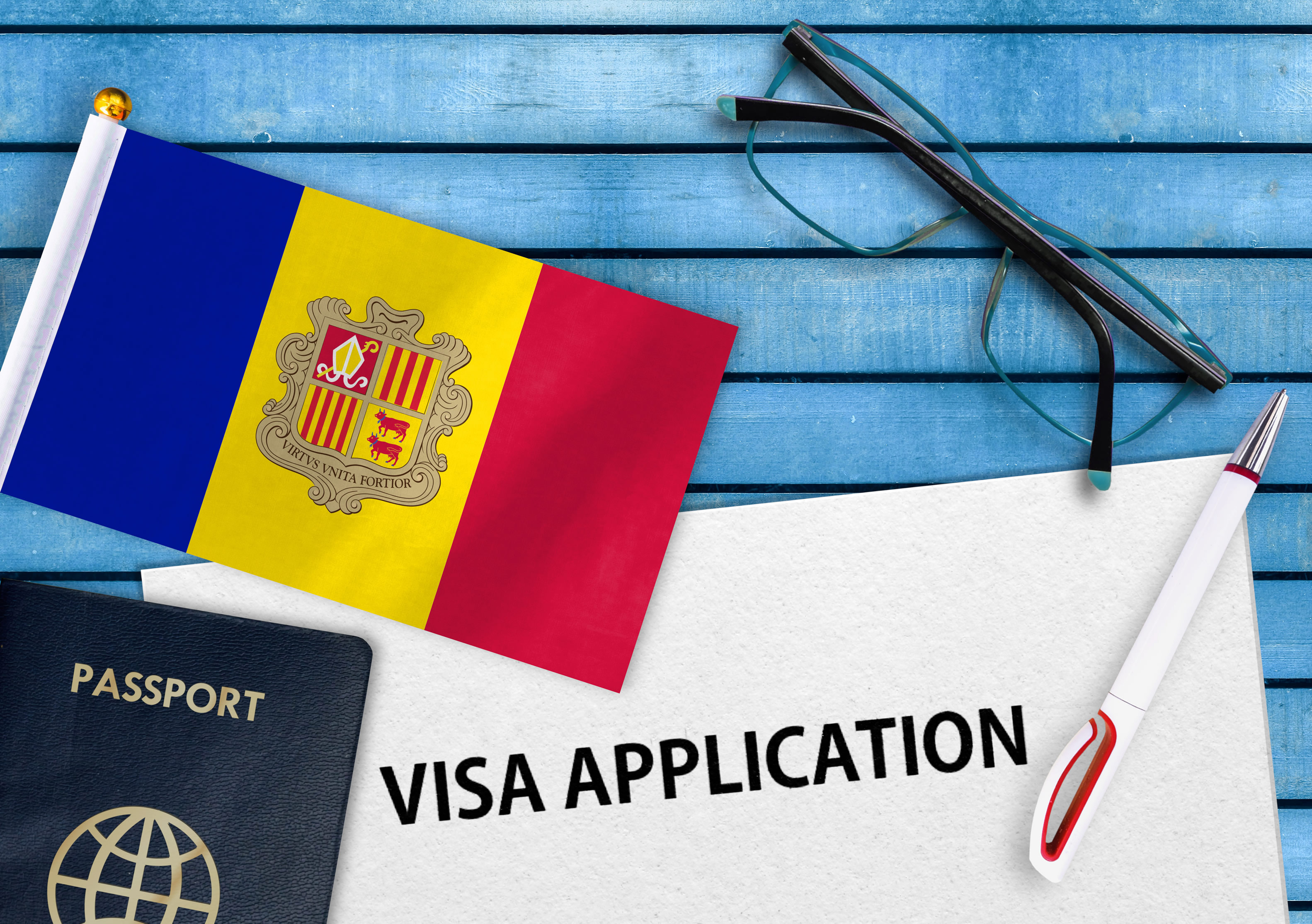
How to incorporate a company in Andorra
Brief summary of the process, costs and timing for incorporating a company in Andorra
If you’re a European entrepreneur tired of watching your profits disappear into heavy tax obligations, Andorra deserves your serious attention. This small principality nestled between France and Spain has transformed from a closed economy into a transparent, OECD-compliant business hub—and the numbers speak for themselves.
Introduction to Andorra: The Country, Economy, and Business Environment
Nestled in the heart of the Pyrenees between France and Spain, Andorra is a principality that combines natural beauty with a dynamic business environment. Despite its modest population of around 72,000, Andorra boasts a robust and diversified economy, anchored by tourism, retail trade, and a sophisticated banking and financial services sector. The country’s strategic location offers businesses a gateway to both the Iberian Peninsula and the broader European market, making it an attractive destination for foreign investment.
Andorra’s government has prioritized economic modernization and transparency, creating a streamlined process for company registration and fostering a favorable tax environment. The principality’s legal and regulatory framework is designed to support both local entrepreneurs and international investors, ensuring ease of doing business and long-term economic stability. With a high standard of living, low unemployment, and a resilient financial system, Andorra provides a secure foundation for companies seeking growth and stability in a competitive global landscape.
Quick Overview: Why Set Up a Company in Andorra Now?
Andorra company formation in 2026 offers something increasingly rare in Europe: predictability combined with genuinely low taxation. The corporate tax rate is capped at 10%, making it one of the lowest in Europe, and the general indirect tax (IGI) is set at just 4.5%, the lowest in Europe. There’s no inheritance or wealth tax, and the legal system has been stable since the 1993 Constitution established the current parliamentary framework.
What surprises many entrepreneurs is that non-residents can now own 100% of an Andorran company. Since the economic liberalization reforms around 2012, foreign ownership restrictions have disappeared for most business activities. Typical incorporation times run about 9-14 weeks from initial filing to being fully operational.
Core benefits at a glance:
- Corporate tax rate of 10% standard, reducible to 2% with qualifying incentives
- Tax benefits: low corporate tax rate, IGI at 4.5% (lowest in Europe), and no inheritance, gift, or net wealth tax for residents
- Political and legal stability since the 1993 Constitution
- Barcelona airport is roughly 3 hours by car; Toulouse is similar
- Full participation in automatic exchange of information (CRS) since 2013
Let’s address the elephant in the room: Andorra is not a tax haven anymore. The country has signed double taxation agreements with France, Spain, Belgium, and Luxembourg, allowing residents to avoid double taxation, as well as with Portugal, UAE, Cyprus, Liechtenstein, Malta, San Marino, United Kingdom, The Netherlands, Hungary, Iceland, Korea Rep, Latvia, Lithuania, Montenegro, Romania, Czech Republic. It participates fully in CRS reporting and has exited all major grey lists. Any company in Andorra operates under the same transparency standards expected across most European countries.
Andorra as a Tax and Wealth Management Hub for Entrepreneurs
An Andorran company can serve dual purposes: as an active operating vehicle for your business and as a holding structure for long-term wealth planning. This flexibility, combined with Andorra's significant tax benefits—including low corporate and personal tax rates, various deductions, and the absence of wealth tax—draws entrepreneurs from France, Spain, Belgium, and beyond—countries where tax friction on business income and wealth transfers has become increasingly painful.
The tax system works in your favor at multiple levels. Corporate income tax sits at 2-10% depending on your activity and available incentives. Personal income tax (IRPF) is capped at 10% across all brackets, with numerous allowances, providing a low tax burden. There’s no inheritance or gift tax for Andorran residents, and no net wealth tax as of 2026.
Consider the contrast: a French entrepreneur faces up to 45% inheritance tax, 30%+ on investment income, IFI wealth tax, and social contributions that can consume 45-55% of gross salary. A Belgian resident deals with similar pressures. In Andorra, that same entrepreneur can structure dividend distributions and capital gains to face single-digit effective rates.
Practical tax advantages:
- General indirect tax (IGI) at 4.5% versus 21% in Spain and 20%+ in France—significant for B2C e-commerce
- Dividend income from Andorran companies to Andorran resident individuals often exempt or very lightly taxed
- No tax on most wealth transfers between residents
- Social security contributions around 22% total versus 45-55% in France
Quality of life matters too. Very low crime rates, mountain environment, international schools, and modern healthcare support relocation decisions for those moving with families.
Why Consider Andorra Company Formation in Today’s European Tax Climate?
The period between 2015 and 2025 brought relentless tax pressure increases across France, Spain, and Belgium. Social contributions rose, wealth taxes expanded or were restructured, and exit taxes on unrealized gains became more aggressive. For entrepreneurs building significant wealth, these trends created strong “push” factors. Planning for departure for tax purposes is crucial to minimize liabilities, especially to avoid costly immediate taxes on unrealized gains.
What happened in neighboring countries:
- France: Social contributions often 45-55% on salaries, exit tax on unrealized gains when leaving, inheritance tax up to 45% in direct line
- Spain: Similar social contribution burdens, wealth tax in most regions, inheritance tax varying by autonomous community
- Belgium: Heavy social contributions, complex holding structures needed for tax efficiency
How Andorra responded since 2010:
- Implemented OECD standards for transparency and information exchange
- Introduced modern corporate and personal tax laws (effective 2014-2016)
- Signed automatic exchange agreements under CRS
- Maintained rates low and predictable while neighbors increased theirs
The “pull” factors are equally compelling. Andorran social security contributions total roughly 22% (about 15.5% employer, 6.5% employee). You can combine Andorran tax residency with international business operations. Regulation is business-friendly for technology, consulting, and e-commerce projects.
Concrete comparison scenario:
For a €10m business sale, a French resident entrepreneur might face combined taxes consuming 55-60% of the value over time—between income tax, social contributions, exit tax complications, and eventual inheritance tax. With proper pre-sale planning involving Andorran relocation and company formation, that same entrepreneur could reduce the overall tax burden to sub-10% across generations.
Beyond Taxes: Stability, Geography and Lifestyle
Andorra’s parliamentary co-principality model—shared between France and Spain since centuries ago, formalized in the 1993 Constitution—has delivered remarkable political stability.
Non-tax arguments for an Andorran company set up:
- Three hours’ drive from Barcelona and Toulouse airports, compatible with remote business models
- Economic liberalization since 2012-2014 opened virtually all sectors to foreign investment
- Growing French, Spanish, Portuguese, and English-speaking communities
- International schools and modern healthcare infrastructure
- Very low crime rate and high quality of life in a mountain environment
- Digital infrastructure suitable for tech and online service businesses
Tax and Legal Advantages of an Andorra Company Set Up
Understanding what an Andorran SL (limited liability company) or SA (joint stock company) actually enjoys in terms of tax and legal treatment helps you make informed decisions. Both natural persons and legal persons benefit from identical frameworks regardless of nationality since the liberalization reforms.
Corporate tax structure:
- Standard rate: 10%
- Lower effective rates via deductions or sector incentives (holding regime, intellectual property income reductions)
- Equal treatment for local and foreign-owned companies
- No minimum tax base—small companies with low profits face proportionally low taxes
Personal tax for residents:
- IRPF brackets from 0% to 10%
- Dividends from Andorran companies to Andorran resident individuals fully exempt
- No tax on most wealth transfers between residents
- No net wealth tax as of 2026
Double taxation agreements in force (2026):
France, Spain, Portugal, Luxembourg, UAE, Cyprus, Liechtenstein, Malta, San Marino, United Kingdom, The Netherlands, Hungary, Iceland, Korea Rep, Latvia, Lithuania, Montenegro, Romania, Czech Republic. These treaties reduce withholding taxes on cross-border dividends, interest, and royalties to around 0-5% in many cases.
Legal stability:
- Clear Companies Act with predictable rules
- Low bureaucracy at the companies registry
- Audited accounts required above certain thresholds (e.g., €500,000 turnover or assets)
- Tax authorities apply rules consistently
Competitive payroll costs example:
For an IT engineer earning €60,000 gross in Andorra, social security contributions total roughly 22%. Take-home pay preserves approximately 80-85% after all deductions. The same salary in France might yield only 60-70% net after social contributions of 45-55%.
Banking Environment and Compliance
Every Andorran company needs a local bank account to deposit share capital and operate. The main banks—Andbank, Creand, MoraBanc, and Vall Banc—follow strict KYC/AML and CRS standards.
What banks typically require:
- Passport copies for all shareholders and directors
- Proof of address (utility bill or bank statement, recent)
- CV or professional background for key individuals
- Business plan explaining the company’s activities
- Proof of source of funds (especially for initial capital deposits)
- Expected transaction volumes and flows
Average account opening timelines run 2-4 weeks in straightforward cases, longer for high-risk sectors like crypto or finance-adjacent activities.
The era of “secret” banking is over, and that’s actually beneficial. CRS participation means Andorra shares information automatically with other countries. This transparency provides long-term security and reputation—your Andorran company won’t be viewed with suspicion by counterparties or foreign tax authorities.
Available Corporate Forms: SL vs SA and Other Options
Most foreign entrepreneurs choose between the Societat Limitada (SL) and Societat Anònima (SA). A limited company (SL) is a specific legal entity popular in Andorra, offering flexibility and limited liability, making it attractive for entrepreneurs and investors. Partnership forms exist for niche cases but represent a tiny fraction of incorporations.
Societat Limitada (SL):
- Minimum share capital: €3,000, fully paid upfront
- Limited liability for shareholders (the company’s debts do not reach personal assets, providing strong protection)
- The Andorran Limited Company (SL) can be formed by a single person or multiple partners, with no maximum limit on the number of partners.
- Ideal for: SMEs, tech startups, consulting, holdings, digital businesses
- Governance: Can have a sole director; no mandatory board
- Share transfer restrictions possible in bylaws
Societat Anònima (SA):
- Minimum capital: €60,000
- Limited liability identical to SL (company’s debts are separate from shareholders’ personal assets)
- Ideal for: Larger or regulated projects, companies needing prestige, future public offerings
- Governance: Requires board of directors
- Shares more easily transferable
A sole proprietorship is another option for company Andorra set up. This simple, individual-owned business structure is suitable for solo entrepreneurs, offering ease of setup and minimal legal requirements. Unlike the more complex SL and SA, a sole proprietorship has straightforward management and limited regulatory obligations, but does not provide limited liability protection.
Since liberalization of foreign investment, non-residents can own 100% of shares in either SL or SA, subject to approval by the Foreign Investment Department when holding 10% or more.
More than 90-95% of new incorporations are SLs. They combine low minimum share capital, flexibility in share transfers, and simpler management requirements. Both SL and SA benefit equally from Andorra’s tax and treaty network—the choice depends on scale, image, and future capital-raising plans rather than tax treatment.
How to Choose the Right Structure for Your Andorra Company Set Up
Key decision criteria:
- Required capital (€3,000 vs €60,000)
- Number of partners and expected growth in shareholders
- Whether outside investors may join later (SA makes this easier)
- Regulatory constraints in your business sector
- Long-term succession goals and family governance needs
Practical scenarios:
- Solo consultant or digital nomad: SL with sole director
- E-commerce business with 2-3 founders: SL with straightforward governance
- Family office holding several operating subsidiaries: SA for governance and prestige
- Tech startup planning future investment rounds: Consider SA for investor familiarity
Align your company type with how banks perceive you, what investors expect, and whether you might sell the company within 5-10 years. An existing company structure that fits future plans saves expensive restructuring later.

Step-by-Step: How to Set Up a Company in Andorra (2026 Process)
A standard Andorra company formation for a foreign shareholder usually spans 9-14 weeks, depending on document preparation speed, bank compliance timelines, and government approvals. The registration process follows a predictable sequence.
All core documents—articles of association, notarial deed—must be in Catalan. Foreign documents typically require sworn translations and apostilles. The entire process involves anti-money laundering checks at both the Foreign Investment Department and the banks, so clear documentation is essential throughout.
Step 1 – Obtain the AIN (Administrative Identification Number)
The AIN is a personal identification number for foreign investors issued by Andorran authorities. You need it before submitting foreign investment files or appearing before an Andorran notary.
Typical documents required:
- Copy of passport
- Proof of address (utility bill or bank statement)
- Basic personal data form
- Criminal record certificate (depending on current rules)
Timeline: About 1-2 weeks from complete file submission to receipt of AIN.
Start this step early. Delays here create bottlenecks throughout the entire incorporation process.
Step 2 – Company Name Reservation
Submit several company name options (usually 3 alternatives) to the companies register to increase approval chances.
Requirements:
- Names must not conflict with existing companies
- Cannot be misleading about activities
- Protected terms like “bank” or “insurance” require special authorizations
- Names should work in Catalan
Timeline: Roughly 7-14 days for approval, with reservation valid for 6 months.
Practical tips: Check trademark registers, consider domain availability, and ensure the name supports your future branding strategy.
Step 3 – Foreign Investment Authorisation
Any non-resident individual or company owning 10% or more of the share capital is considered a foreign investor requiring prior authorisation from the Foreign Investment Department.
Typical documents:
- AIN for all foreign investors
- Passport copies
- CVs of shareholders and directors
- Criminal record extract
- Draft business plan outlining the business project
- Draft articles of association stating corporate purpose
- Declaration of beneficial owners
Timeline: About 3-4 weeks in straightforward cases. Longer for sensitive activities (financial services, crypto, gambling).
Approval is generally granted when the business is legitimate, source of funds is clear, and economic activity aligns with Andorran economic interests.
Step 4 – Opening the Bank Account and Paying in the Share Capital
Once foreign investment is authorised, founders must open a temporary corporate account with an Andorran bank and deposit the initial share capital (€3,000 for an SL).
Bank KYC requirements:
- Personal presence often required (some banks accept video identification)
- Detailed explanation of business model
- Expected transaction flows and volumes
- Source of funds documentation
After capital is paid in, the bank issues a certificate of deposit that the notary needs for the incorporation deed.
Timeline: 1-3 weeks depending on bank, document completeness, and risk profile.
Step 5 – Drafting Bylaws and Preparing the Notarial Deed
The company’s bylaws must be drafted in Catalan, defining:
- Corporate purpose (specific enough to avoid questions—e.g., “consulting and provision of digital marketing services internationally”)
- Registered office
- Share capital structure
- Governance rules
- Transfer of shares provisions
- Accounting obligations
A local lawyer typically prepares drafts, coordinates with the notary, and ensures compliance with Andorran law.
Timeline: About 1-2 weeks depending on complexity and client feedback speed.
Step 6 – Signature Before an Andorran Notary
At the notarial meeting, founders or their authorised representatives sign the deed of incorporation, which includes the approved bylaws and bank certificate of capital deposit.
Key points:
- Shareholders who cannot travel may grant power of attorney (apostilled and translated into Catalan)
- Notary verifies identity documents, AIN, foreign investment authorisation
- After signature, notary submits deed electronically to companies register
The incorporation formalities at this stage typically conclude within a few days of signature.
Step 7 – Registration with the Companies Register and Obtaining the TRN
Once the deed is registered, the company becomes a legal entity with a registration number in the Registre de Societats.
The company must also register with the tax authorities to obtain its tax registration number (TRN), functioning similarly to a VAT/tax ID. This tax number must appear on invoices and official communications.
Timeline: About 1-2 weeks from notarial signature to full registration and TRN issuance.
From this point, the company can issue invoices, sign contracts, and hire staff, subject to any sector-specific trading licence requirements.
Step 8 – Commercial Licence and Operational Setup
Many activities require an “Obertura de Comerç” (trading licence) from the Andorran government and sometimes the local town hall (comú).
Timeline: Presumed approval for straightforward online services; 3-4 weeks for more regulated activities requiring inspection.
Operational setup elements:
- Lease office or co-working space if physical presence needed
- Register employees with CASS (social security)
- Set up accounting systems
- Subscribe to professional liability insurance where relevant
Authorities may verify real substance in Andorra—local address, management presence, staff—to confirm the company isn’t a purely artificial structure.
Step 9 – Post-Creation Obligations and Ongoing Compliance
Annual obligations:
- Filing financial statements (IFRS-aligned standards)
- Corporate tax returns
- IGI returns where applicable
- Payroll and social security reporting
- Annual shareholder meetings and minutes
- Beneficial owner information updates
Companies above certain thresholds (approximately €500,000 turnover or total assets) need audited accounts.
Registration fees typically run €1,016-1,480 initially, with an annual fee of €851-935 thereafter.
Work with local accountants to ensure your Andorra company set up remains compliant and retains its tax advantages over the long term.
Access to the European Market and Investment Opportunities
One of Andorra’s key advantages is its seamless access to the European market. As a member of the European Customs Union, Andorra enables companies to trade goods efficiently across borders, tapping into a vast and diverse customer base. The principality has also established double taxation agreements with several European countries, including France, Spain, and Portugal, which help reduce tax burdens and simplify cross-border operations for businesses.
Andorra’s competitive tax regime is a major draw for foreign investors. With a corporate tax rate capped at 10%—significantly lower than in most European countries—businesses benefit from a favorable tax environment that supports profitability and reinvestment. The country’s commitment to transparency and compliance with international standards further enhances its reputation as a reliable jurisdiction for company formation.
Investment opportunities in Andorra are broad and growing. The tourism sector remains a cornerstone, but there is increasing momentum in technology, digital services, and innovative business models. Supported by a highly skilled workforce and modern infrastructure, Andorra is well-positioned for companies looking to expand their presence in Europe while optimizing their tax situation and operational efficiency. Whether you are launching a startup or expanding an existing company, Andorra offers a unique blend of market access, tax advantages, and economic stability.
Concrete Advantages of an Andorra Company for Your Assets and Family Succession
An Andorran company isn’t just an operating tool—it’s a central instrument in long-term family wealth planning for natural or legal persons seeking generational wealth preservation.
With no inheritance tax or gift tax for Andorran tax resident individuals, shares of an Andorran company can generally transfer inter-vivos or upon death without local transfer tax. This makes shareholding structures powerful for succession.
Example structure:
A family holding company owns foreign real estate and investment fund participations. Dividends and capital gains flow through the Andorran entity. Distributions to family members occur with minimal tax leakage, and shares pass to the next generation without Andorran inheritance taxation.
Shareholder agreements and Andorran inheritance pacts (pactes successòries) can organize generational transfer while keeping control with experienced family members.
Critical coordination point: Andorran planning must coordinate with civil and tax rules in countries where family members or assets remain located. French heirs, for example, may still face French inheritance tax on certain assets regardless of Andorran company structures.
Illustrative Case Study: From High Taxation to Andorra-Based Structure
Consider a fictional 45-year-old French tech entrepreneur who sold a company for €15m in 2024 and plans relocation and Andorra company formation in 2026.
Initial problem:
- Exposure to French income tax on sale proceeds
- Social contributions on any active income
- IFI wealth tax on assets exceeding €1.3m
- Future inheritance tax potentially consuming 45% of estate
- Over two generations, perhaps only half the wealth remains after all taxes
Solution steps:
- Pre-move exit tax planning in France (establishing compliance with deferral rules)
- Formation of an Andorran holding SL
- Relocation to Andorra and acquisition of tax residency (Category D requires 34%+ company ownership)
- Transfer of investment portfolio and participations into Andorran company structure
Results:
- Annual drag from taxation reduced to single digits
- Increased capacity for reinvestment
- Succession to children simplified—no Andorran inheritance tax on company shares
- Pacte successòrie potentially enables tax-free inter-vivos share transfers
All steps must comply with each country’s laws. The goal is legal optimization through the favorable tax environment, not evasion.
Mistakes to Avoid When You Set Up a Company in Andorra
Andorra company formation is powerful but can backfire if rushed or poorly structured. Direct taxation benefits require genuine compliance.
Typical misconceptions:
- Thinking that spending 183 days is the only tax residency test (Andorra uses center-of-interests tests)
- Ignoring exit tax or deemed disposal rules in the departure country
- Assuming a virtual office and Andorran bank account constitute sufficient “substance”
- Believing Andorra remains a tax free jurisdiction with no reporting obligations
Substance requirements:
Registering a company without aligning it with real business activity invites problems. Foreign tax authorities may recharacterize profits as taxable in the original country if management and decision-making remain there. You need genuine presence: local management, staff, or at least regular board meetings in Andorra.
Common compliance oversights:
- Forgetting to declare foreign shareholdings or bank accounts after moving
- Missing deadlines for corporate filings or tax returns in Andorra
- Neglecting to update beneficial owner information
- Assuming home-country obligations end immediately upon relocation
Prepare a structured departure plan 12-18 months before your move, especially if you hold large unrealized gains in shares or cryptoassets.
Clarifying the “Tax Haven” Myth
Andorra appeared on various grey lists in the past. Since around 2010-2014, however, the country concluded information exchange agreements and introduced modern corporate and personal taxes. It’s been removed from OECD blacklists.
Andorra is not on the European Union list of non-cooperative jurisdictions. Banks and tax authorities fully apply AML rules and CRS reporting. The competitive tax regime is legitimate and transparent.
Any Andorra company set up must withstand scrutiny from both Andorran and foreign tax authorities. Robust documentary evidence of residency and substance protects your structure long-term.
Practical FAQ About Andorra Company Formation and Set Up
Is it legal to set up a company in Andorra primarily for tax optimization?
Yes, provided you comply with both Andorran requirements and your home country’s rules. Tax planning using low-tax jurisdictions is legal; evasion is not. Substance and genuine economic activity matter.
Do I need to be an Andorran resident to open a company?
No. Foreign investors can own 100% of an Andorran company without residency. However, becoming tax resident is often recommended for consistent planning, especially for the competitive tax regime benefits on personal income.
What is the minimum share capital for an SL?
€3,000, fully paid upfront via deposit into an Andorran bank before notarization.
How long does the full incorporation process take?
Typically 9-14 weeks from initial AIN application to fully operational status with trading licence and bank account.
Are Andorran banks safe, and how difficult is account opening?
Andorran banks are well-capitalized and regulated to EU-equivalent standards. Account opening involves stringent due diligence (KYC/AML) and typically takes 2-4 weeks. Prepare thorough documentation of source of funds and business model.
What about exit tax when leaving France or Spain?
Both countries may impose exit taxes on unrealized gains when you relocate. France offers payment deferral under certain conditions. Professional advice in your departure country is essential before moving—ideally 12-18 months in advance.
Which Sectors Thrive With an Andorra Company?
Best-suited sectors:
- Online services and SaaS
- IT and software development
- Digital marketing and consulting
- Trading companies with light logistics (outsource warehousing to Spain or France)
- Investment fund management and holding structures
- E-commerce brands (benefit from 4.5% IGI versus 20%+ VAT in the European market)
Sectors requiring special consideration:
Heavily regulated industries—banking and financial services, insurance, gaming—need special licences and face intensive supervision.
Mini-examples:
A SaaS startup serving EU clients can operate from Andorra, benefiting from low taxes while ensuring GDPR compliance for European customers. An e-commerce brand might base headquarters in Andorra while third-party logistics in Barcelona handle fulfillment—capturing the tax advantages without conducting business that requires local warehousing.
Any sector must comply with international AML requirements and data protection rules even if headquartered in Andorra.
Conclusion: Is Setting Up a Company in Andorra Right for You?
Andorra offers something increasingly difficult to find in Europe: a combination of low and predictable taxation, absence of inheritance and wealth tax, political economic stability since 1993, and genuinely high quality of life. For entrepreneurs and investors in 2026, these factors make conducting business through an Andorran structure worth serious consideration.
The right legal form—typically an SL for most—combined with genuine substance creates a platform not just for tax efficiency but for long-term business and family planning. This isn’t about finding a short-term loophole. It’s about building a foundation for the next 10-20 years.
Success depends on proper planning. Analyze your home-country exit rules early—ideally 12-18 months before moving. Design your Andorran structure carefully. Build real substance with management presence, staff, or at least genuine operational activity.
Take professional advice in both your country of origin and in Andorra before committing. A well-structured Andorra company set up, compliant with all applicable laws, can provide tax incentives and wealth preservation benefits that simply aren’t available in other countries nearby. The principality has earned its place as a legitimate, transparent jurisdiction for serious entrepreneurs ready to make a strategic move.